
Every child deserves to feel safe and supported at school. With one in seven young Australians experiencing severe emotional distress linked to peer mistreatment, addressing harmful behaviour early is critical. This toolkit equips families and educators with modern strategies to create kinder, more inclusive environments for kids.
Recent data shows bullying remains a significant concern for Australian, impacting mental health and classroom performance. Through collaborative approaches – involving teachers, parents and students – we can break cycles of negativity before they escalate.
You’ll discover practical methods to:
- Recognise early warning signs like sudden anxiety or withdrawal
- Strengthen communication between schools and families
- Access free resources from national support services
Let’s work together to build resilience and positive social connections for our young people. Support starts here.
Key Takeaways
- Australia faces urgent challenges with youth mental health linked to peer conflicts
- Early intervention prevents long-term academic and social impacts
- Schools now use evidence-based frameworks to address harmful behaviour
- Parents play vital roles in spotting changes in their child’s wellbeing
- Free workshops help teachers manage classroom dynamics effectively
Understanding Bullying in the Australian Context
Recent studies reveal over 60% of Australian students encounter peer mistreatment by Year 9. Many incidents go unreported due to confusion about what constitutes bullying versus everyday disagreements. Let’s clarify the facts to help families and educators respond effectively.
What Is Bullying and Its Impact?
Bullying involves repeated harmful actions where one person holds more social or physical power. Unlike occasional arguments, it creates lasting emotional scars. Australian research shows 1 in 4 students experience power-based harassment weekly, with 40% developing anxiety symptoms.
Common impacts include:
- Lower academic performance due to stress
- Social withdrawal affecting friendship-building skills
- Increased risk of depression in adolescence
Common Myths and Realities
Myth: “Kids should handle it alone to build resilience.”
Reality: Targeted children need adult support – 68% report improved outcomes when parents and teachers collaborate early.
Myth: “Only physical acts count.”
Reality: Verbal taunts, exclusion, and online conflict cause equal harm. Modern anti-bullying programs address all forms through classroom discussions and anonymous reporting tools.
Schools using evidence-based frameworks see 30% fewer incidents within two years. By understanding these dynamics, communities create environments where every child thrives.
Recognising the Signs and Types of Bullying
Spotting bullying behaviour early helps prevent long-term harm. Three main forms exist – direct, indirect, and cyberbullying – each requiring different responses from adults and peers.
Direct, Indirect, and Cyberbullying Explained
Direct bullying involves visible actions like physical aggression or verbal insults. Examples include tripping kids in playgrounds or mocking someone’s appearance during class. These acts often leave immediate clues like torn clothing or tearful reactions.
Indirect bullying works through social manipulation. Students might spread rumours about a peer’s family or deliberately exclude them from group activities. A Year 5 student recently shared: “They stopped inviting me to birthday parties after telling everyone I was ‘weird’.”
Cyberbullying uses digital platforms to harass. Fake social media accounts impersonating classmates or cruel comments under TikTok videos are common. Over 35% of Australian teens report receiving mean messages during online gaming sessions.
Behaviour Patterns and Warning Signs
Watch for sudden changes in a child’s habits. Unexplained stomach aches before school, lost belongings, or reluctance to join extracurricular activities can signal trouble. Teachers notice shifts too – a once-engaged student might stop raising their hand or sitting with friends.
Peers often witness early signs. A 2024 study found 62% of students knew about bullying incidents before adults. Schools now train classmates to safely report concerns through anonymous apps or trusted staff members.
Quick action matters. When adults address these red flags promptly, 80% of cases resolve within two weeks. Open conversations about daily experiences help kids feel supported while navigating tough social situations.
Dealing with bullying in primary school
Young learners thrive when equipped with simple tools to manage challenging social situations. Recent school safety reports emphasise the importance of role-playing scenarios and consistent adult support to reduce peer conflicts.
Effective Strategies for Students
When facing unkind behaviour:
- Use confident body language – stand tall, make eye contact
- Say “I don’t like that” firmly, then walk away
- Tell a trusted teacher exactly what happened using specific details
The Kids Helpline’s step-by-step guide suggests practising responses with friends: “Try saying ‘Let’s find better games’ if someone’s being left out.”
Practical Guidance for Parents
If your child shares concerns:
- Stay calm and thank them for speaking up
- Document dates, times, and witnesses
- Contact the school to develop a safety plan together
Create a supportive home environment through daily check-ins. One parent shared: “We use car rides to chat about friendship ups and downs – it feels less formal.”
| Student Actions | Parent Responses | Outcomes |
|---|---|---|
| Reporting incidents promptly | Scheduling teacher meetings | Faster resolution |
| Using “I feel” statements | Validating emotions | Stronger trust |
| Joining peer support groups | Arranging playdates | Improved social connections |
Schools across Australia now use anonymous reporting apps like ZippyCares, helping staff address issues before they escalate. Remember – small, consistent actions make big differences in keeping kids safe.
Empowering the Community: Roles of Parents, Teachers, and Peers
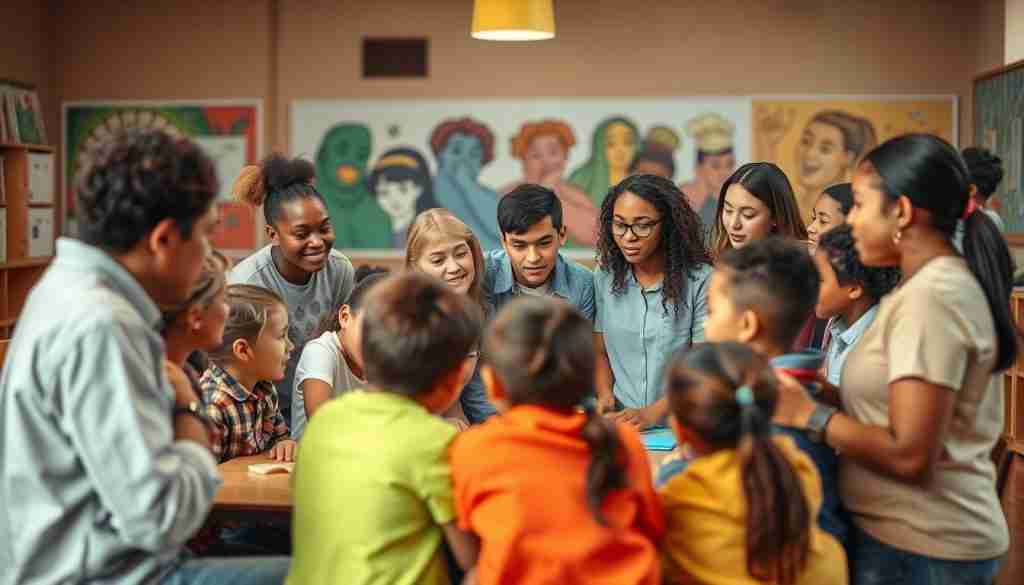
Building safer schools requires teamwork from all corners of the community. Research shows that when teachers, parents, and classmates work together, schools see up to 40% fewer incidents of harmful behaviour. Let’s explore how each group contributes to this collective effort.
Creating Safe Spaces Through Collaboration
Teachers and staff play pivotal roles in shaping classroom culture. Many Australian schools now use daily check-ins to help children express concerns. One Year 4 teacher shared: “Our ‘weather report’ system lets kids rate their day – it’s helped us spot issues early.”
Effective strategies include:
- Training staff to recognise subtle signs like sudden friendship changes
- Running peer mediation programmes where students resolve conflicts
- Designing group activities that build empathy and teamwork
Growing Stronger Together
Peers often hold the power to shift social dynamics. A recent Melbourne primary school project trained students to become ‘kindness ambassadors’. These young leaders organised lunchtime games that included everyone, reducing playground conflicts by 30%.
Parents strengthen these efforts by:
- Modelling respectful communication at home
- Encouraging kids to support others facing challenges
- Attending school workshops on social skill development
As one counsellor notes: “When a child knows they have multiple safe adults and friends, they’re more likely to speak up.” By combining these approaches, communities create networks of care that help every person thrive.
Creating a Safe and Supportive Learning Environment
Australian schools are transforming playgrounds and classrooms into spaces where respect and kindness take centre stage. Through clear frameworks and community teamwork, educators and families can nurture environments that help children flourish socially and academically.
Implementing Anti-Bullying Policies in Schools
Effective policies act as roadmaps for addressing harmful behaviour. The Bullying No Way! initiative reports schools with documented protocols resolve 78% of incidents within 10 days. Key elements include:
- Regular staff training on recognising subtle signs of exclusion
- Anonymous reporting systems accessible via school websites
- Restorative practices that repair relationships rather than punish
One NSW primary school reduced playground conflicts by 45% after introducing “buddy benches” and weekly kindness awards. Their policy clearly outlines steps for handling complaints, ensuring every voice gets heard.
Building Positive Home and School Connections
Strong partnerships between families and educators create safety nets for children. Collaborative approaches like parent workshops on social-emotional learning help align strategies across both environments.
| School Action | Family Response | Impact |
|---|---|---|
| Monthly wellbeing newsletters | Discussing topics at home | 33% increase in early reporting |
| Online incident forms | Prompt follow-up | Faster resolutions |
| Peer support programs | Encouraging participation | Stronger student networks |
Many schools now share resources through their websites, including downloadable guides on managing friendship challenges. As one principal notes: “When homes and classrooms reinforce the same values, children feel secure everywhere.”
Conclusion
Creating safe spaces for young Australians relies on our shared commitment. Harmful behaviour thrives in silence but falters when communities unite. Research confirms schools using anti-bullying strategies see happier students and better learning outcomes.
Parents and teachers play vital roles. Simple actions matter – daily check-ins at home, using conflict resolution skills, and praising kindness. The Kids Helpline reports 80% of cases improve when adults respond quickly and consistently.
Prioritising mental health helps children bounce back. Schools now train peers to support classmates facing challenges. One student shared: “When my friend stood up for me, it changed everything.”
Keep these steps handy:
- Use trusted resources like government websites for latest strategies
- Encourage kids to speak up through school apps or family chats
- Celebrate progress – every small win builds confidence
Together, we can shape environments where every child grows resilient. Let’s stay alert, informed, and ready to act – because safe schools benefit everyone.