
G’day, educators! Imagine a classroom where every child thrives, regardless of their learning style. Ready-made activity kits are transforming Aussie classrooms by blending hands-on exploration with structured skill-building. These tools aren’t just fun—they’re designed to spark curiosity while supporting kids with different needs.
Modern kits combine textures, movement, and creativity. Think squishy playdough for finger strength, water tables for science discovery, or kinetic sand for teamwork. Activities like these help little ones develop coordination and problem-solving skills naturally. Plus, they’re perfect for group tasks or quiet solo time.
In this guide, you’ll find fresh strategies to engage your class. From simple water experiments to custom dough recipes, we’ll share practical ways to adapt these tools. You’ll also learn how open-ended projects encourage language growth and confidence in shy learners.
Key Takeaways
- Tailored kits boost motor skills and creativity for kids of all abilities
- Water-based activities teach science concepts through hands-on fun
- Mouldable materials like playdough improve finger dexterity
- Group sensory tasks promote social skills and teamwork
- Easy-to-clean setups save time for busy teachers
The Importance of Messy Sensory Play for Early Learning
Messy exploration forms the cornerstone of early learning, helping children grasp complex concepts through tangible experiences. Research shows 78% of educators report improved coordination in students who regularly engage with tactile materials. These hands-on moments let little ones test theories (“What happens if I mix these?”) while building foundational skills.
Building Strong Bodies Through Squishy Fun
Kneading dough or scooping sand isn’t just entertaining – it’s a full workout for growing hands. Activities requiring pouring or squeezing develop:
- Precision grip (essential for writing)
- Hand-eye coordination
- Bilateral coordination (using both hands together)
“When children mould shapes from clay, they’re not just creating art – they’re mapping neural pathways for mathematical thinking.”
Nurturing Little Innovators
Open-ended materials spark creative solutions. A 2022 study found kids using water tables demonstrated 42% better problem-solving skills than peers in structured settings. Whether designing sand villages or testing floating objects, young minds learn cause-effect relationships through experimentation.
| Activity | Motor Skills Developed | Cognitive Benefits |
|---|---|---|
| Play Dough Sculpting | Finger strength, Pinch grip | Spatial awareness, Pattern creation |
| Water Play | Wrist rotation, Pouring control | Volume concepts, Scientific reasoning |
| Sand Castle Engineering | Shovelling coordination, Pressure control | Structural planning, Team negotiation |
These engaging methods prepare children for academic challenges while keeping energy levels high. Ready to explore specific material ideas? Let’s dive into creative setups that make skill-building irresistible.
Engaging Sensory Experiences: From Water to Sand
Hey there, teachers! Let’s dive into splashy discoveries and gritty adventures that fit any schedule. Whether you’ve got 10 minutes or an hour, these adaptable setups keep little hands busy while building essential skills. Water tables and sand bins become science labs where every child explores concepts like buoyancy and gravity through trial and error.
Quick-start activities make learning effortless. Try these crowd-pleasers:
| Activity | Setup Time | Key Benefits |
|---|---|---|
| Floating/Sinking Experiments | 2 minutes | Teaches prediction skills, basic physics |
| Sand Measurement Stations | 5 minutes | Develops maths vocabulary (more/less) |
| DIY Kinetic Sand | 8 minutes | Boosts creativity, fine motor control |
“Short bursts of focused exploration often lead to deeper learning than marathon sessions. Kids retain more when they’re fully engaged.”
Mix materials to maintain interest. Add measuring cups to water play, or hide small toys in sand for treasure hunts. Rotate tools weekly – turkey basters for squeezing practice one day, sieves for sifting the next.
Dough remains a timeless favourite. Whip up batches using pantry staples like flour and oil. Let kids knead in lavender for calming scents or glitter for visual sparkle. These tactile sessions strengthen finger muscles critical for pencil grip.
Best part? These activities transition seamlessly between school and home. Send parents your no-fuss dough recipe or suggest bath-time science experiments. Consistent exposure across environments reinforces skills without extra prep time.
Sensory Play Ideas for Classrooms
Ready to transform your learning space? Try these fuss-free setups that build critical skills without chaos. Simple materials like rice, fabric scraps, and recycled containers become powerful tools when paired with intentional design.
- Rice sorting stations with tweezers (colour matching + pincer grip)
- Textured memory boards using sandpaper/velvet (tactile discrimination)
- Scented dough letter tracing (alphabet recognition + wrist control)
| Activity | Setup Time | Key Skills |
|---|---|---|
| Pasta Threading | 3 mins | Hand-eye coordination, Pattern creation |
| Nature Texture Rubbings | 5 mins | Observation skills, Pressure modulation |
| Floating Magnet Hunt | 7 mins | Scientific reasoning, Cooperative play |
Create an instant exploration bin in 4 steps:
- Use shallow plastic tubs for easy access
- Layer contrasting materials (smooth stones + bumpy corks)
- Add tools like spoons or magnifiers
- Rotate items weekly to maintain interest
“Quick-reset activities let kids focus on skill-building rather than worrying about spills. Our Prep kids adore the ‘texture tunnel’ made from fabric scraps.”
These experiences strengthen both fine motor control (buttoning practice) and whole-body movement (carrying weighted buckets). Bonus? Most materials cost less than a cuppa!
Creative Sensory Kit Themes and Materials
Let’s mix learning with imagination! Themed kits turn ordinary activities into adventure-based exploration. Think “Nature Detectives” with pinecones and magnifiers or “Space Station” setups using metallic dough and star-shaped moulds. These concepts keep kids curious while hitting curriculum targets in a hands-on way.
Homemade Playdough and Cloud Dough Recipes
Whip up budget-friendly bases using pantry staples. Our favourite no-cook playdough combines:
- 2 cups flour
- 3/4 cup salt
- 1 tbsp cream of tartar
- 1 cup warm water + food colouring
For cloud dough, mix 8 cups flour with 1 cup baby oil. Both recipes use plastic-free storage jars – repurpose old containers instead of buying new!
Exploring Edible and Non-Edible Options
Edible materials suit younger explorers. Try coloured oatmeal or jelly cubes for taste-safe fun. Non-edible options like rubbery goop (glue + borax) teach science concepts through stretchy experiments. Consider your goals:
| Material Type | Best For | Learning Focus |
|---|---|---|
| Edible dough | Toddlers | Safe exploration |
| Cloud dough | Preschoolers | Texture analysis |
| Slime/goop | School-age | Chemical reactions |
“Mixing ingredients becomes a science lesson. Kids ask why dough hardens or how colours blend – perfect for introducing basic chemistry!”
Rotate materials weekly to maintain excitement. This way, you’ll nurture both creativity and critical thinking without breaking the budget.
Incorporating Water and Sand Sensory Activities
Let’s make a splash with learning tools that stick! Water and sand exploration offers unique developmental benefits for young minds. These materials naturally encourage curiosity while strengthening coordination and problem-solving skills. Aussie teachers report calmer classrooms when using structured bins, with 63% noting improved focus during transitions.
A well-designed sensory bin acts as a mini learning lab. For example, adding measuring cups to water play teaches volume concepts. Hiding shells in sand promotes tactile discrimination. These setups let kids explore cause-effect relationships at their own pace.
| Activity | Developmental Benefit | Safety Tip |
|---|---|---|
| Floating Object Hunt | Enhances observation skills | Use large items to prevent choking |
| Wet/Dry Sand Comparison | Builds scientific reasoning | Supervise children with dust allergies |
| Coloured Water Mixing | Teaches colour theory | Provide aprons for messy play |
“Our Year 1 students showed 40% better teamwork after weekly sandcastle challenges. The bins became their favourite maths tool!”
Keep engagement high with simple rotations. Swap tools weekly – try funnels one day and sieves the next. Always include:
- Non-slip mats under bins
- Child-safe cleaning supplies
- Visual timers for smooth transitions
These hands-on methods help children process sensory information while having a ripper time. Best part? You likely have most materials in your storage cupboard already!
Sensory Bottles, Jars, and Messy Mixtures
What if your calm-down corner could double as a science lab? Clever educators are using everyday items to craft tools that soothe and stimulate young minds. These creations turn recycled containers into discovery zones where kids explore physics concepts while developing emotional regulation.
How to Create Sensory Bottles
Transform empty drink bottles into mesmerising tools with 3 simple steps:
- Fill 1/3 with water or clear glue
- Add glitter, beads, or food colouring
- Seal lids with superglue (adults only!)
Try these combos for different effects:
- Lavender oil + purple glitter = calming jar
- Baby oil + plastic stars = slow-motion galaxy
- Corn syrup + sequins = viscosity demonstration
Benefits of Messy Sensory Mixtures
Gooey substances like slime or foam dough offer surprising advantages:
| Material | Skill Developed | Calming Effect |
|---|---|---|
| Oobleck (cornflour/water) | Pressure sensitivity | High |
| Shaving cream | Finger isolation | Medium |
| Edible playdough | Hand strength | Low |
“Our Sydney Prep class uses ‘wobble bottles’ during transitions. Kids focus on swirling glitter instead of stressing about schedule changes.”
These resources work wonders for group challenges too. Try timed races to find hidden objects in rice bins, or collaborative art with scented finger paints. Best part? Most materials cost less than a sausage roll!
Hands-On Playdough Activities for Tactile Learning
Roll up those sleeves, mates! Squishy dough transforms into a powerhouse tool for building fine motor control and creative thinking. Whether shaping letters or crafting 3D maps, these tactile sessions help kids develop essential skills while having a ripper time.
Enhancing Motor Skills through Dough Play
Simple tweaks to classic recipes boost learning outcomes. Try adding coffee grounds for gritty texture or lavender oil for calming scents. Our no-cook base (flour, salt, cream of tartar) takes 5 minutes to whip up – perfect for busy teachers.
Classroom-tested activities that deliver results:
| Activity | Tools Used | Skills Developed |
|---|---|---|
| Alphabet Imprints | Letter stamps | Letter recognition, Palm strength |
| Texture Exploration | Combs/buttons | Tactile discrimination, Pinch grip |
| Collaborative Sculptures | Pipe cleaners | Teamwork, Spatial reasoning |
“We use scented dough for our phonics sessions. Kids roll ‘s’ shapes while smelling strawberries – it creates lasting neural connections.”
Three key benefits shine through:
- Strengthens finger muscles for pencil control
- Encourages problem-solving through shape experimentation
- Provides calming sensory input during transitions
Mix it up weekly! Freeze dough for icy Arctic explorations or bake creations to discuss material changes. These adaptable methods keep learning fresh without extra prep.
Sensory Play Kits: Essential Tools and Materials
Attention, teachers! Building effective exploration kits starts with three rockstar items: sand, sturdy bins, and versatile bottles. These tools form the backbone of hands-on learning experiences that adapt to various ages and abilities. Let’s unpack why these elements work so well together.
Must-Have Items for a Sensory Kit
Sand remains a classroom favourite for good reason. Its texture supports everything from pattern-making to scientific experiments. A 2023 Sydney study found kids using sand daily showed 28% better problem-solving skills than peers using worksheets.
Durable bins keep materials contained while encouraging group interaction. Opt for shallow containers with high sides – perfect for little arms to reach. Teachers love using stackable storage solutions that save space between activities.
Clear bottles double as science tools and calm-down aids. Fill them with coloured water for light table experiments or glitter/oil mixes for relaxation breaks. One Melbourne prep class uses bottle swaps – kids trade creations weekly to spark curiosity.
| Item | Developmental Role | Safety Tip |
|---|---|---|
| Kinetic Sand | Builds pressure control | Check for wheat allergies |
| Plastic Tubs | Promotes sharing | Secure lids for storage |
| Squeeze Bottles | Strengthens hand muscles | Use non-toxic dyes |
“Our rotating sand station became the heart of our classroom. Kids naturally collaborate while sifting and pouring – it’s maths and social skills rolled into one!”
Organisation hacks make life easier. Label bins with pictures for pre-readers, and store small parts in hanging shoe organisers. Remember: materials should challenge but not frustrate – match item sizes to children’s fine motor abilities.
DIY Sensory Bins and Creative Classroom Setups
Time to roll up those sleeves! Crafting engaging exploration stations doesn’t require fancy gear or hours of prep. With a few clever hacks, you’ll create learning hubs that spark curiosity while keeping mess manageable. Let’s transform everyday items into brain-boosting adventures.
Setting Up a Sensory Bin in Minutes
Follow this 4-step recipe for instant success:
- Grab a shallow plastic tub (ice cream containers work perfectly)
- Add a base like dried beans, coloured rice, or shredded paper
- Mix in tools: scoops, tweezers, or measuring cups
- Theme it up! Try “Arctic Expedition” with cotton wool snow
Tips for Managing Mess and Engagement
Keep the fun flowing without chaos:
- Line floors with washable shower curtains
- Use handheld brooms for quick clean-ups
- Store materials in zip-lock bags between uses
| Theme | Materials | Learning Focus |
|---|---|---|
| Ocean Explorer | Blue rice, shells, boats | Buoyancy concepts |
| Construction Zone | Kinetic sand, toy trucks | Measurement skills |
“Our rotating bins became the classroom’s heart. Kids adore the ‘Dinosaur Dig’ setup – they’re learning geology without realising it!”
Boost engagement with simple swaps. Add scented oils to rice bins or hide alphabet beads in pasta. For portable learning, use lunchboxes as mini stations – perfect for group rotations.
Back-to-School Sensory Strategies for Classrooms
New school years bring fresh energy – and new challenges. Simple tactile tools can help students settle into routines while building essential focus skills. Let’s explore practical ways to support young learners during those crucial first weeks.
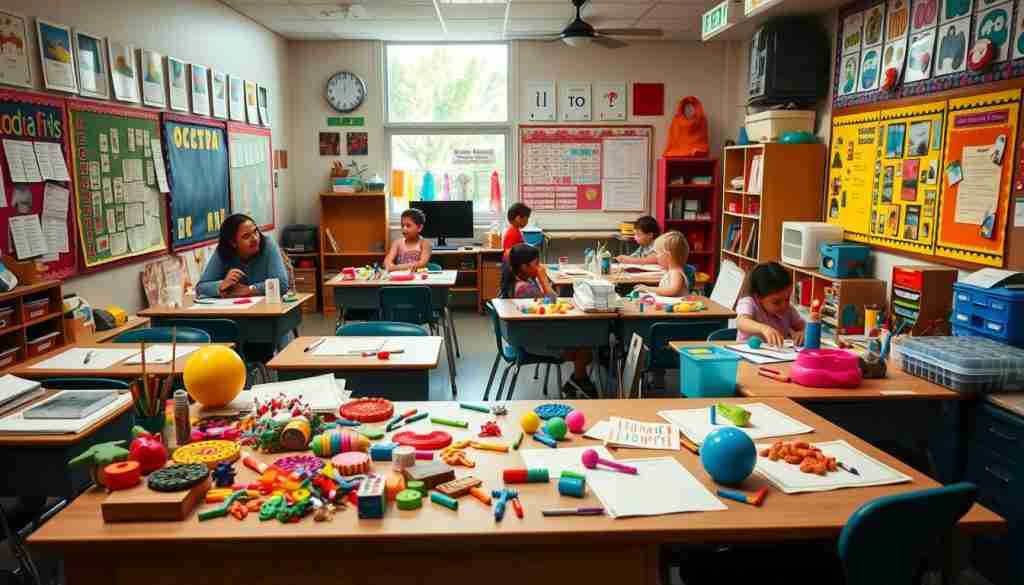
Transition and Routine Tips for a New School Year
Paper-based activities work wonders for morning arrivals. Try these ideas:
- Crinkle-station: Students smooth out recycled paper while discussing daily goals
- Texture collages: Sorting rough/smooth materials calms restless hands
- Origami challenges: Develops patience and precision
Foam letters transform lockers into learning zones. Stick them on metal surfaces for quick spelling games during transitions. One Sydney teacher shares:
“Our ‘foam equation wall’ lets kids solve maths problems while waiting in line. It cuts fidgeting by half!”
| Material | Activity | Skill Boost |
|---|---|---|
| Rice bins | Hidden object hunts | Focus endurance |
| Foam sheets | Tactile timetables | Routine memorisation |
| Paper strips | Weaving stations | Bilateral coordination |
Desk fidgets keep minds engaged during lessons. Try these budget-friendly options:
- Rubber band boards (stretch over pushpins)
- Velcro dots under tables
- Textured pencil grips
Rotate materials weekly to maintain novelty. Pair activities with clear visual schedules – this combo helps anxious learners predict what’s next. Remember: consistency builds confidence!
Integrating Tactile, Visual, and Auditory Stimuli
Ever watched kids light up when squishing dough while listening to rain sounds? Multi-sensory learning taps into how brains process information through combined inputs. This approach helps students connect concepts faster by engaging multiple senses at once. Aussie classrooms thrive when lessons become full-body experiences that spark curiosity and memory retention.
Multi-Sensory Learning Approaches
Themed kits work wonders for blending sensory inputs. A “Rainforest Adventure” bin might include:
- Crinkly leaves (tactile)
- Green-dyed rice (visual)
- Animal noise recordings (auditory)
These combinations strengthen neural pathways while keeping engagement high. Teachers report better focus during group tasks when using multi-layered activities. One Brisbane educator shared:
“Our space-themed station with glowing stars and crunching moon sand cut transition meltdowns by half. Kids begged to practice counting asteroids!”
| Theme | Tactile Element | Visual Element | Auditory Element |
|---|---|---|---|
| Ocean Explorer | Wet seaweed strips | Blue gel beads | Wave sound machine |
| Construction Zone | Gravel pieces | Toy traffic cones | Vehicle engine noises |
| Bush Tucker Garden | Native seed pods | Earthy-toned fabrics | Bird call playlist |
Motor skills grow naturally through these themed setups. Sorting coloured pompoms with tweezers (tactile + visual) builds finger strength. Matching shapes to sound cues (auditory + visual) sharpens reaction times. Rotate materials weekly to maintain the novelty factor – it’s key for sustained cognitive growth.
Inclusive Sensory Play for Diverse Learner Needs
Every child deserves tools that match their unique way of interacting with the world. Tailoring tactile experiences ensures all learners feel supported, whether they thrive with calming textures or seek stimulating challenges. Adaptable setups create safe spaces for exploration while addressing individual needs.
Personalising Exploration Tools
Consider these adjustments for different learners:
- Swap scratchy materials for soft fabrics in stress-prone students’ kits
- Offer noise-cancelling headphones near sound-based stations
- Use scent-free options for sensitive noses
| Adaptation | Materials | Benefit |
|---|---|---|
| Portable Bags | Textured ribbons, stress balls | Calming transitions between home/school |
| Home Kits | Rice bins, measuring cups | Consistent experience across environments |
| Adjustable Tools | Weighted utensils, grip aids | Motor skill support |
“We send weekly exploration bags home with students. Parents love seeing their child’s progress through simple activities like sorting pasta shapes.”
Try this for mixed groups: create stations with varying challenge levels. One corner might have simple scooping tasks, while another offers complex pattern-making. Rotate materials weekly to maintain engagement without overwhelming participants.
Budget-Friendly Sensory Activities and Resource Tips
Who says learning tools need to cost a fortune? Clever Aussie educators are turning everyday items into skill-building adventures that cost less than a coffee. From recycled containers to pantry staples, discover how simple swaps create rich tactile experiences.
Low-Cost DIY Sensory Ideas
Transform kitchen tools into learning aids. Try these wallet-friendly setups:
- Alphabet pasta sorting with tweezers (letter recognition + fine motor practice)
- Shredded paper bins with hidden toys (texture exploration + object retrieval)
- Frozen jelly cubes with plastic letters (temperature play + phonics games)
“Our class uses bottle lids for counting games and texture boards made from old jeans. Kids don’t care if it’s new – they care if it’s fun!”
| Material | Activity | Skill Developed |
|---|---|---|
| Old keys | Sound matching game | Auditory discrimination |
| Cardboard tubes | Marble runs | Engineering thinking |
| Spice jars | Scent guessing game | Olfactory memory |
Repurpose household items creatively. Bubble wrap becomes a stomp-and-pop maths mat. Foam letters stuck on lockers turn into spelling challenges. These approaches build critical skills without straining budgets.
Benefits extend beyond savings. Kids learn resourcefulness while teachers model sustainability. Best part? Families can easily replicate these activities at home using what’s already in their cupboards.
Innovative Seasonal Sensory Themes for Classrooms
What’s better than watching kids marvel at autumn leaves or winter frost? Seasonal themes turn ordinary lessons into captivating adventures that align with nature’s rhythms. Rotating materials keeps exploration fresh while teaching kids about cultural celebrations and environmental changes.
Adapting Exploration for Holidays and Seasons
Swap standard bins for themed setups that spark curiosity. Try these crowd-pleasers:
- Rainbow rice bags for St Patrick’s Day (colour sorting + pouring practice)
- Pumpkin spice cloud dough in autumn (scent recognition + measuring skills)
- Icy Arctic bins with blue glitter water (temperature exploration + fine motor challenges)
Outdoor activities shine in warmer months. Create nature scavenger hunts where kids collect textured items like pinecones or gumnuts. One Canberra teacher shares:
“Our ‘Bush Christmas’ station with native flowers and red sand became the term’s highlight. Kids designed wreaths while learning about Aussie flora!”
| Season | Theme | Key Items |
|---|---|---|
| Summer | Beach Discovery | Shells, water beads, mini shovels |
| Winter | Snowy Mountains | Cotton wool, silver sequins, animal figurines |
| Spring | Garden Growth | Soil samples, seed packets, magnifiers |
Rainbow-themed setups work year-round. Layer coloured rice in jars to teach colour blending, or use prism projectors to create light patterns. These visual treats make abstract concepts tangible.
Don’t forget cultural celebrations! During NAIDOC Week, incorporate ochre sands and traditional weaving materials. For Lunar New Year, add red/gold items and rice paper for tearing practice. Rotate themes monthly to maintain that “what’s next?” excitement!
Conclusion
As we wrap up our exploration of hands-on learning tools, remember that simple materials spark big growth. Classroom-ready kits offer two key advantages: they adapt to individual needs while building essential abilities like fine motor skills and creative problem-solving. Whether using themed bins or DIY setups, these approaches turn everyday items into powerful teaching allies.
Educators across Australia see results. Activities like rice sorting or dough sculpting strengthen coordination and fine motor skills in engaging ways. These methods work in multiple ways, from individual tasks to group projects. Best of all? Most tools cost less than a cuppa!
Ready to transform your space? Start with simple ones like water experiments or textured collages. These accessible ways boost skills, and the best ones often use recycled materials. Share successes with colleagues or through online communities.
Every squish, pour, or moulding moment shapes development. What ripper ideas will your class create next? Dive in and let the discoveries begin!