
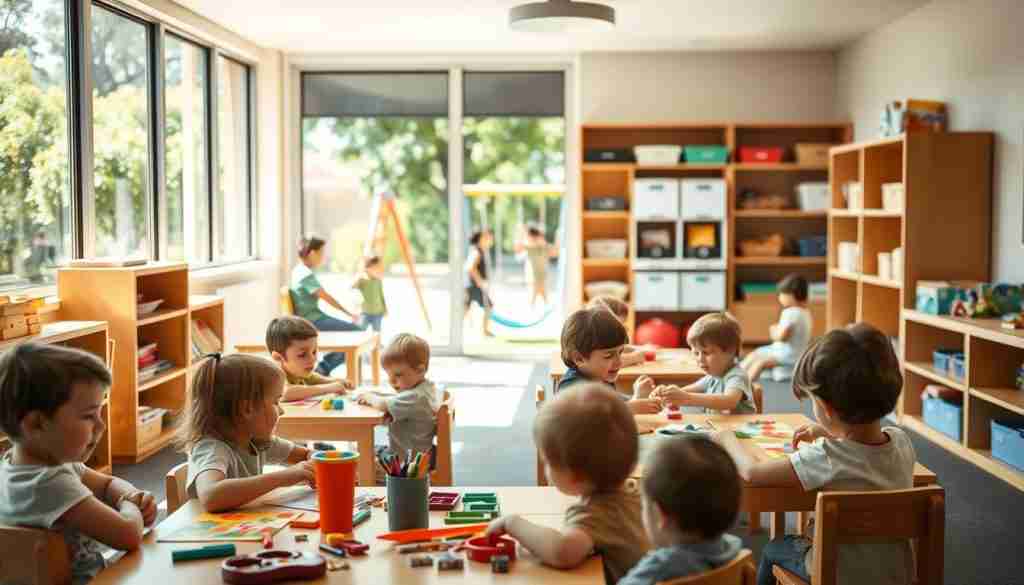
Deciding when to enrol your little one in early education can feel like a big step. Across Australia, families have options for three- or four-year-old programmes before primary school begins. These formative years shape social skills, confidence, and foundational learning—so it’s natural to wonder: is four the right age?
Each state sets its own rules for enrolment cut-offs, meaning timing can vary. For example, Victoria allows flexibility based on developmental readiness, while Queensland uses strict birthdate guidelines. This patchwork of policies leaves many parents weighing their child’s unique needs against local requirements.
Early starters might gain confidence in group settings or build literacy skills sooner. However, younger children could find longer days tiring or struggle to keep up with peers. Experts suggest considering emotional maturity alongside academic readiness—after all, every child blossoms at their own pace.
Key Takeaways
- Australian families can choose between three- and four-year-old kindergarten programmes.
- State-specific cut-off dates influence eligibility, so check local guidelines.
- Social readiness matters as much as academic skills for a smooth transition.
- Early enrolment may benefit confident kids but challenge those needing more time.
- Government resources help parents assess their child’s developmental milestones.
Understanding Early Childhood Education in Australia
Australia’s early learning landscape offers diverse pathways to nurture young minds. Programs blend play-based activities with intentional skill-building, guided by qualified teachers who tailor experiences to each child’s needs.
What Early Learning Looks Like
Structured programmes focus on social growth, basic literacy, and problem-solving. Sessions often include group storytelling, creative play, and hands-on experiments. These activities help children adapt to routines while sparking curiosity.
State-by-State Variations
Location significantly shapes program availability and rules. Here’s how three regions compare:
| State | Program Settings | Cut-off Dates |
|---|---|---|
| Victoria | School-based & community centres | 30 April |
| Queensland | Mostly community-run | 30 June |
| NSW | Mixed school/childcare options | 31 July |
Victoria’s flexible approach lets families delay entry if needed. In contrast, Queensland requires strict adherence to birthdate rules. National quality standards ensure all programmes meet baseline safety and educational benchmarks, regardless of location.
“Early childhood frameworks prioritise holistic development over rigid academics,” notes the Australian Children’s Education Council.
Parents should visit local centres to gauge which environment suits their child’s temperament. School-based options ease transitions to primary years, while community programmes often offer extended hours for working families.
Australian School Age Cut-Offs and Enrolment Guidelines
Navigating school enrolment rules can feel like solving a puzzle with missing pieces. State governments set strict cut-off dates that determine when children become eligible for formal education. These deadlines create clear boundaries but leave many families questioning whether their little one fits neatly into the system.
Key Date Requirements by State
Australia’s enrolment timelines vary dramatically between regions. For example:
| State | Cut-off Date | Minimum Starting Age |
|---|---|---|
| NSW | 31 July | 4 years 6 months |
| Victoria | 30 April | 4 years 8 months |
| Queensland | 30 June | 4 years 6 months |
A child born days before their state’s deadline could begin formal programs nearly a year earlier than peers born just weeks later. Take Lucy (born 15 June) and Oliver (born 15 August) in NSW – they’ll share a classroom despite a 14-month age gap.
Flexibility in School Entry Age
Some states allow developmental readiness to influence start dates. Victoria permits mid-year assessments for children needing extra time, while Queensland strictly follows birthdates. “Age alone doesn’t determine readiness,” explains primary teacher Mara Lipton. “We look for emotional resilience and basic self-care skills during orientation.”
Parents uncertain about their child’s preparedness can use free online readiness calculators endorsed by education departments. These tools evaluate social skills, attention span, and communication abilities. Combined with teacher consultations, they help families make informed choices about deferring or proceeding with enrolment.
Weighing the Benefits and Risks of starting kindergarten at 4
Choosing the ideal moment to begin formal education sparks lively debates among families and educators alike. While some little ones thrive in structured environments, others benefit from extra time to develop foundational abilities. Let’s explore how timing impacts young learners’ experiences.
Pros of Early School Start
Children who engage with quality programmes often build stronger social connections through guided play and collaborative activities. Regular interaction with peers helps develop sharing skills and emotional awareness. Studies show early exposure to literacy-rich environments can boost vocabulary by up to 30% compared to home-based care.
Structured learning experiences also nurture independence. As education specialist Dr. Ellen Torres observes: “Young learners in supportive settings often demonstrate improved problem-solving abilities that carry into primary school.” Many parents report increased confidence in children who adapt well to classroom routines.
Potential Challenges for Young Learners
Not every four-year-old thrives in formal environments. Some struggle with separating from caregivers or managing frustration during group tasks. Research indicates the youngest children in a cohort are 20% more likely to need additional support with emotional regulation.
Extended days may overwhelm those still developing self-care skills like opening lunchboxes or managing bathroom needs. Queensland’s education department notes that children born just before cut-off dates often require tailored support to keep pace with older classmates academically and socially.
Balancing these factors requires honest conversations with teachers and careful observation of individual needs. Many families find combining state readiness checklists with professional advice helps make confident decisions about this pivotal step.
Assessing Your Child’s Readiness for Kindergarten
Determining if your little learner is prepared for their first classroom experience involves more than just checking birthdates. A blend of social, emotional, and physical milestones helps paint the full picture of readiness. Let’s unpack practical ways to evaluate these factors.
Evaluating Social and Emotional Skills
Can your child take turns during games or express frustration calmly? These abilities matter as much as knowing letters. Look for signs like initiating play with peers, separating from caregivers without distress, and recovering quickly from upsets. Kids who ask for help appropriately or share toys often adapt well to group settings.
Recognising Cognitive and Physical Milestones
Basic counting, recognising shapes, and holding pencils correctly show developing skills. Can they button shirts or open lunchboxes independently? Physical coordination matters too—activities like hopping on one foot or catching balls indicate motor readiness. Language skills shine when children articulate needs clearly or follow two-step instructions.
Using Readiness Calculators and Teacher Feedback
Online tools like the Australian Early Development Census checklist help gauge progress. Combine these with preschool observations—educators often spot strengths or challenges parents might miss. “We look for curiosity during storytime and persistence with tricky tasks,” shares Melbourne kindergarten teacher Lina Chen.
Try this quick check:
- Names basic emotions (happy, sad, angry)
- Sits through 10-minute activities
- Recognises their written name
Remember, readiness isn’t perfection. Small struggles are normal! Chat with local educators if unsure—they’ll help identify supports for a confident start.
Exploring Kindergarten Models and Program Options
Australian families face a delightful dilemma when selecting early learning pathways. Three main options—community hubs, childcare centres, and school-based programmes—each offer unique benefits tailored to different lifestyles and developmental goals.
Community, Childcare and School-Based Kindergartens
Community centres often feel like extended families, with mixed-age groups and flexible attendance. These programmes typically emphasise creative play and local cultural connections. Childcare-based kindergartens integrate education with extended care hours, ideal for working parents needing full-day support.
School-linked options ease transitions to primary education through familiar routines and shared facilities. A recent Queensland study found 68% of families choosing school-based programmes valued the continuity for their child’s confidence.
| Model | Hours | Key Focus |
|---|---|---|
| Community | 9am-12pm | Social skills & creativity |
| Childcare | 7am-6pm | Care-education balance |
| School-based | 9am-3pm | Academic readiness |
Understanding Program Hours and Structure
Half-day sessions suit children needing gradual exposure to group settings, while full-day options build independence through sustained routines. Many centres blend structured learning with free play—like outdoor exploration time balanced with literacy circles.
Parents can use state-specific age calculators to check eligibility across programme types. Victoria’s Early Childhood Intervention portal, for instance, helps assess if a child meets developmental benchmarks for their chosen model.
Consider your family’s rhythm: Do you need wrap-around care? Does your little one thrive in smaller groups? Visiting multiple centres provides firsthand insights. As Brisbane educator Tessa Nguyen advises: “The right environment feels like a second home, not just a classroom.”
The Importance of Early Learning for Future Success
The journey through early education leaves lasting imprints on young minds. Quality programmes don’t just teach letters and numbers—they shape how children approach challenges, collaborate with peers, and view learning itself. Research shows these experiences influence academic performance well into primary school years.

Long-Term Educational Benefits
A 10-year Western Australia study found children attending play-based programmes scored 12% higher in Year 3 literacy tests. Early exposure to structured routines builds independence, helping kids manage school requirements confidently. Those who develop strong foundational skills often adapt faster to formal learning environments.
State comparisons reveal interesting patterns. While Victoria focuses on social development, Western Australia’s guidelines emphasise problem-solving through hands-on activities. Both approaches prepare children for enrolment by nurturing different aspects of growth.
Building a Love of Learning and Social Competence
Engaging programmes spark curiosity that lasts beyond the classroom. When children explore science through baking experiments or maths via block towers, they associate learning with joy. “We see graduates still applying these creative thinking strategies in Year 2,” shares Perth educator Marco Velez.
Social skills flourish through guided group activities. Sharing art supplies or resolving playground disputes teaches emotional awareness. These interactions help children form friendships more easily during school transitions.
“The right start builds resilience—not just report cards.”
For families weighing options, focus on environments matching your child’s personality. Confident explorers might thrive in bustling school-based settings, while thoughtful observers could blossom in smaller community groups. Every path leads toward growth when nurtured with care.
Conclusion
Choosing the best educational path for your child involves balancing developmental cues with local school policies. While early enrolment can boost social skills and familiarity with learning routines, younger children may need extra support adapting to structured environments.
State requirements like Western Australia’s July cut-offs create fixed timelines, but parents know their child’s unique rhythm best. Use free readiness checklists alongside teacher insights—these tools help assess emotional maturity and practical abilities like recognising numbers or managing self-care.
Quality early learning lays foundations for future success, whether through community programs or home-linked options. Remember, there’s no universal “right age”—some thrive at four, while others benefit from another year of play-based growth.
Trust your observations, consult local educators, and embrace flexible thinking. Every child’s journey to kindergarten enrolment unfolds differently, and that’s perfectly okay.