
Deciding when your little one should begin their formal learning journey is one of the most important choices families face. Across Australia, states and territories use different names like Kindergarten , Prep , or Reception – and each has unique rules about when children can join. For example, in the ACT, kids need to turn five by 30 April to start that year.
This article breaks down everything you need to know. We’ll explore how local guidelines shape school entry dates, why developmental readiness matters just as much as birth dates, and how to prepare your family for this exciting step. You’ll find clear comparisons between regions and practical tips from education experts.
Whether you’re planning ahead or making last-minute decisions, understanding these factors helps create a smooth transition into the classroom. Let’s dive into the details that matter most for your child’s first school experiences.
Key Takeaways
- Cut-off dates vary significantly between states – check your local requirements early
- Developmental milestones often influence success as much as chronological years
- Most regions offer flexible start options for children born near eligibility deadlines
- Early enrolment discussions with teachers help identify readiness indicators
- Transition programs ease the move from home or childcare to formal learning
Understanding Kindergarten Age Requirements in Australia
Australia’s school entry rules vary more than you might expect. Each state sets its own criteria for when young learners can begin formal education, creating a patchwork of deadlines and program names.

State-Specific Cutoff Dates
Key differences in enrolment rules include:
- NSW: 31 July cutoff for turning five (called Kindergarten)
- Queensland: Non-compulsory Prep year with 30 June birthday limit
- ACT: 30 April deadline for first-year learners
Legal Framework and Flexibility
All states require attendance once children turn six. Exceptions exist for those needing extra time:
- Birthdays within 4-6 weeks of cutoff dates often qualify for delayed entry
- Medical or developmental assessments may support exemption requests
Victoria and South Australia use unique naming systems – Foundation and Reception respectively. These programs focus on building social skills through play-based learning.
Always check your local education department website for current rules. Many regions offer transition workshops to help families navigate enrolment processes smoothly.
Kindergarten Age NSW: Cutoffs, Rules and How to Decide
The kindergarten age NSW rule is simple: your child can start Kindergarten at the beginning of the school year if they turn five on or before 31 July in that year. That means some NSW kids start as young as four years and seven months, while others are nearly six — and both are perfectly legal. Children in NSW must be enrolled in school by their sixth birthday, which is the compulsory school age.
What that looks like in practice:
- A child born 30 June 2021 turns five on 30 June 2026 — just before the 31 July cutoff — so they can start Kindergarten in Term 1 2026, aged four years and eight months
- A child born 1 September 2021 turns five on 1 September 2026 — after the cutoff — so they start Kindergarten in 2027, aged nearly five and a half
- Most NSW families enrol in the year their child turns five; holding a child back until they are closer to six is a family choice, not a requirement
Before school, NSW children can attend community preschool or long day care preschool programs, with government Start Strong funding keeping fees low in community preschools in the year before school. Enrolment for public school Kindergarten happens the year before, through your local school — check your catchment on the NSW Department of Education website.
Kindergarten Age in Every Australian State
| State | Can start school (Kindergarten/Prep/Reception) | Compulsory school age |
|---|---|---|
| NSW | Turns 5 by 31 July | 6 |
| VIC | Turns 5 by 30 April | 6 |
| QLD | Turns 5 by 30 June (Prep) | 6 years and 6 months |
| WA | Turns 5 by 30 June (Pre-primary) | 6 |
| SA | Turns 5 (any term, Reception intake) | 6 |
| TAS | Turns 5 by 1 January (Prep) | 5 |
| ACT | Turns 5 by 30 April | 6 |
| NT | Turns 5 by 30 June (Transition) | 6 |
Remember that “kindergarten” itself means different things around Australia: in NSW, VIC, TAS and ACT it is the first year of school, while in QLD, WA and SA a “kindergarten” or “kindy” program is usually the preschool year before school, often for four-year-olds. Always check the current page for your state’s education department, because cutoffs are reviewed periodically.
Factors Influencing the age for starting kindergarten
Determining the right time for school entry involves more than calendar dates. Young learners thrive when their unique growth patterns align with classroom expectations. Let’s explore what shapes this personal decision.
Early Childhood Development and Learning
Educators assess four key areas when considering readiness:
| Skill Area | Milestone Examples | Classroom Activities |
|---|---|---|
| Language | Expressing needs clearly | Group storytelling sessions |
| Motor Skills | Holding pencils correctly | Playdough sculpting |
| Social Skills | Taking turns | Collaborative games |
Modern classrooms use mixed-age groups to nurture different abilities. Older peers often model positive behaviours, while younger ones gain confidence through guided interactions. This approach helps teachers tailor activities to each child’s current abilities.
Social and Emotional Benefits
Building relationships forms the foundation of successful schooling. Children who manage simple conflicts and separate easily from caregivers typically adapt quicker. Many schools use buddy systems where experienced learners help newcomers navigate routines.
Parents and teachers often collaborate through observation checklists. These track progress in areas like emotional regulation and curiosity. Play remains central – it’s how young minds practice problem-solving and creativity naturally.
Navigating Applications and School Transitions
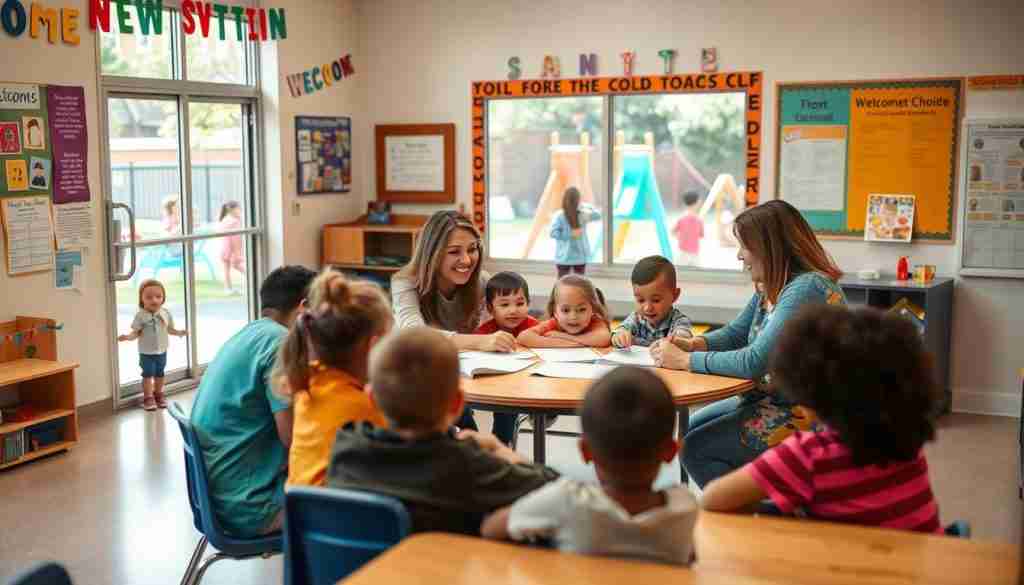
Getting your family ready for formal learning involves careful planning and preparation. Schools across Australia offer structured pathways to help young learners settle into new routines while maintaining individual growth.
Key Steps for Enrolment Success
Most states open enrolments 12-18 months before the school year begins. Follow this checklist:
| Step | Timeline | Documents Required |
|---|---|---|
| Research options | 18 months prior | Local school zone maps |
| Attend open days | 12-14 months prior | Questions list for staff |
| Submit forms | By June/July cutoff | Birth certificate, immunisation records |
Settling-In Strategies That Work
Many institutions like Meli Early Learning use combined groups where 3-5 year olds learn together. This approach:
- Encourages peer mentoring
- Supports different skill levels
- Reduces separation anxiety
Tailored Learning Plans
Educators using the Victorian Early Years Framework create personalised goals for each child. They track progress through:
- Weekly observation journals
- Skill-building play stations
- Family-teacher check-ins
Pro tip: Visit the classroom together before term starts. Practice putting on uniforms and opening lunchboxes to build confidence.
Conclusion
Choosing when to begin formal education blends local rules with your child’s unique growth. Across Australia, school entry dates differ – from NSW’s 31 July cutoff to Queensland’s Prep flexibility. These timelines ensure children join peers at similar stages.
Developmental readiness shapes success as much as birth dates. Strong skills in communication, cooperation, and curiosity often predict smoother transitions. Many schools use play-based approaches to nurture these abilities naturally.
Check your state’s deadlines early using official calculators. Planning ahead helps avoid last-minute stress. Attend orientation days and chat with teachers about your child’s progress.
Remember, learning journeys thrive when families combine local education guidelines with personal observations. Trust your knowledge – you’ve got the tools to make confident choices that support joyful school experiences.
FAQ
What’s the ideal time for my child to begin kindergarten?
Most young learners in Australia start between 4 and 5 years old, depending on their birthdate and state cut-off dates. It’s best to check your local guidelines to confirm eligibility for the upcoming school year.
How do Australian states differ in kindergarten entry rules?
Each state sets its own cut-off dates, usually tied to turning 5 by 30 June or 31 July. For example, NSW requires children to be 5 by 31 July, while Victoria uses 30 April. Always verify with your state’s education department.
Can my child start earlier if they’re developmentally ready?
Exemptions are rare and typically require professional assessments showing advanced social, emotional, and cognitive skills. Most schools prioritise age guidelines to ensure peer-group consistency.
What signs indicate my little one is prepared for kindergarten?
Look for curiosity in learning, basic communication skills, ability to follow simple instructions, and comfort interacting with peers. Teachers often assess these during orientation sessions.
Are there benefits to starting earlier rather than later?
Early entry can support social and emotional growth if the child is truly ready. However, waiting an extra year often helps build confidence and foundational skills, leading to smoother transitions.
When should I submit kindergarten applications?
Deadlines vary, but applications typically open 12–18 months before the school year begins. Contact your preferred primary school or early learning centre for exact dates and required documents.
How do schools help kids adjust to kindergarten?
Many offer orientation programs with short visits, play-based activities, and meetings with educators. Combined groups (like preschool-kindergarten transitions) are also common to ease familiarity.
What if my child needs extra support in kindergarten?
Australian schools use individualised learning plans tailored to each child’s needs. Discuss any concerns with teachers early—they’ll collaborate with you to create supportive strategies.